Source foldable clip on desktop fan for Home Office Travel
Compare 30 foldable clip on desktop fan options with varying power sources, sizes, and customization support. Buyers can evaluate battery or electric models, remote control availability, and OEM services from verified suppliers in China.
Key considerations
Products List












Comprehensive Sourcing Guide
Strategic Sourcing Guide for Foldable Clip-On Desktop Fans
Understanding the Product Category and Core Specifications
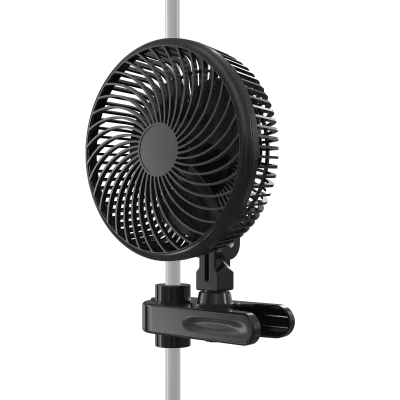
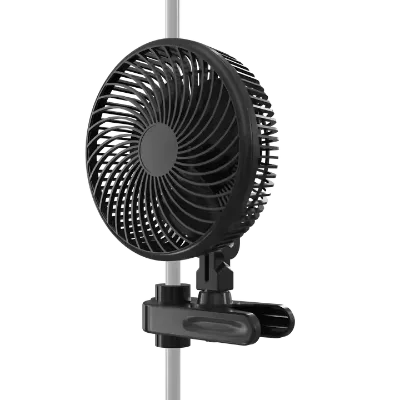
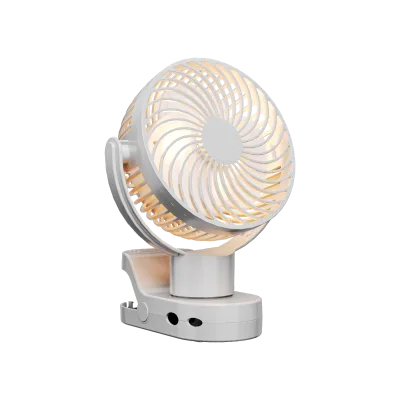
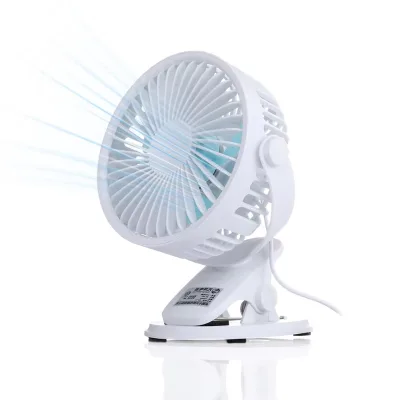
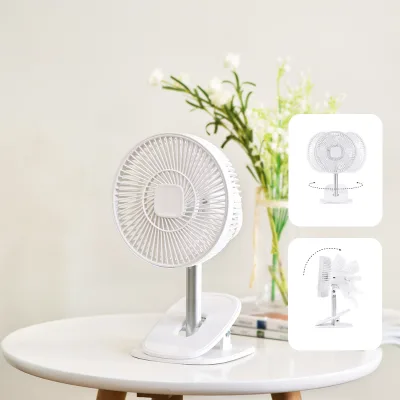
The foldable clip-on desktop fan represents a specialized segment within the personal cooling market, designed for portability and space efficiency. When sourcing this category, buyers must distinguish between models that rely on battery power and those designed for direct electricity connection, as this fundamental difference dictates the intended use case and supply chain requirements. Based on observed market data, these units typically feature a compact form factor with a clip mechanism that allows mounting on desks, shelves, or other vertical surfaces. The product attributes observed indicate a strong prevalence of plastic construction, which balances durability with weight reduction, essential for a device that must be easily moved or repositioned.
Technical specifications for these fans vary significantly based on the power source. Battery-operated models often cite capacities such as 4000mAh Li-ion batteries, providing a self-contained solution for environments without immediate power access. In contrast, electric-powered variants operate on standard voltage ranges, such as 110-240V, and utilize DC electric current types to ensure compatibility with various global power grids. The physical dimensions are critical for the "foldable" aspect; standard packing dimensions observed in the market include configurations like 57.441.539.8cm for carton shipments, while individual unit standards may be as compact as 13.512.319.6cm. The fan blades are typically configured in a three-blade arrangement to optimize airflow while minimizing noise, with observed noise levels ranging between 35-39db, ensuring a quiet operation suitable for office or study environments.
Compliance, Certification, and Regulatory Standards
Navigating the regulatory landscape is a primary concern for B2B buyers importing consumer electronics. The market data confirms that CE certification is a standard requirement for products entering European markets, often appearing alongside ROHS certification, which ensures compliance with restrictions on hazardous substances. Buyers must verify that the specific model they intend to purchase carries these certifications, as they are not universal across all listings. For instance, while some product entries explicitly list CE and ROHS, others may only list CE, requiring a deeper due diligence process to confirm the full scope of compliance.
Beyond certifications, the electrical safety standards for these devices are paramount. The voltage specifications observed, such as 110-240V, suggest a design intended for global adaptability, but the actual plug type and internal wiring must meet the specific safety standards of the destination country. The "Electric Power" source variants must adhere to strict insulation and grounding standards to prevent electrical hazards. Furthermore, the battery capacity specifications, such as the 4000mAh Li-ion battery mentioned in certain models, must comply with international shipping regulations regarding lithium-ion batteries, which often require specific packaging and labeling to prevent fire risks during transit. Buyers should not assume that all listed products meet these standards without explicit verification from the supplier, as the presence of a certification mark on a product page does not guarantee the specific batch's compliance.
Cost Drivers and Pricing Structure Analysis
The pricing structure for foldable clip-on fans is influenced by several key variables, including the power source, material quality, and customization levels. The observed price range in the market spans from 1 to 100 USD, a wide spectrum that reflects the diversity in product tiers. Lower-cost units typically utilize basic plastic materials and standard battery capacities, while higher-priced models may incorporate advanced features such as multiple speed adjustments, premium finishes, or enhanced durability. The material composition, specifically the use of plastic, is a significant cost driver; the grade and type of plastic used affect the product's longevity and resistance to heat, which in turn influences the final price.
Minimum Order Quantity (MOQ) is another critical factor affecting the unit cost. The data indicates an MOQ range from 1 to 3000 units, with specific models showing an MOQ of 24 pieces or 12 pieces. Higher volume orders generally yield lower per-unit costs due to economies of scale in manufacturing and shipping. However, buyers must balance the desire for lower unit prices with the financial risk of holding inventory. The "Customization" attribute is available for many suppliers, allowing for OEM (Original Equipment Manufacturer) services. While customization adds value by enabling branding and specific feature requests, it often increases the initial cost and may require a higher MOQ to justify the setup expenses. The packing method, whether in a color box or a standard carton, also impacts the overall cost, as premium packaging adds material and labor expenses.
Typical Applications and Use Case Scenarios
The versatility of the foldable clip-on desktop fan makes it suitable for a wide array of applications, ranging from residential use to industrial and commercial settings. The "Pedestal" installation type and "Clip" mounting features allow these fans to be placed on desks, workbenches, or shelves, making them ideal for personal cooling in home offices, dormitories, and study areas. The observed "Easily clips on to any surface" feature highlights their adaptability for temporary or semi-permanent mounting in various environments. For users requiring mobility, the battery-powered models with 4000mAh capacity offer a solution for outdoor activities, camping, or workshops where power outlets are unavailable.
In commercial and industrial contexts, these fans serve as auxiliary cooling solutions. The high air volume specifications, such as 3000-5000m³/h for larger ducted models, suggest that while the clip-on form factor is primarily for personal use, the technology can be adapted for broader ventilation needs. The "Duct Diameter" of 6 inches observed in some specifications indicates that certain models can be integrated into ventilation systems. The "10 Adjust Speed" feature allows users to fine-tune airflow to match specific comfort requirements, making these fans suitable for environments with varying thermal loads. Additionally, the "Online support" after-sales service provided by suppliers ensures that users in professional settings can receive technical assistance, which is crucial for maintaining operational continuity in business environments.
Supplier Evaluation and Procurement Considerations
When evaluating potential suppliers for foldable clip-on fans, buyers must look beyond the basic product listing and assess the supplier's capability to meet specific procurement needs. The availability of OEM support and customized services is a strong indicator of a supplier's flexibility and willingness to collaborate on product development. Buyers should verify the supplier's ability to provide the specific certifications required for their target market, such as CE and ROHS, and request documentation to validate these claims. The "Brand Name" observed in the market, such as "Triumph" or "Agricova," suggests that some suppliers offer branded products, while others may focus on private label manufacturing.
The location of the supplier is another critical factor. The data indicates that many products originate from China, specifically from regions like Zhejiang, which is a known hub for manufacturing electronics and small appliances. This concentration of manufacturing capability can lead to competitive pricing and efficient supply chains, but buyers must also consider logistics and lead times. The "Carton Weight" of 14kg and specific carton dimensions must be factored into shipping calculations to ensure accurate freight cost estimates. Additionally, the "Warranty" period, typically observed as 1 Year, is a key indicator of the supplier's confidence in their product quality. Buyers should negotiate warranty terms that align with their risk tolerance and ensure that the supplier has a clear process for handling returns and repairs.
Quality Control and Long-Term Procurement Strategy
Implementing a robust quality control (QC) strategy is essential for mitigating risks associated with sourcing consumer electronics. Given the wide range of observed specifications, from battery capacity to noise levels, buyers should establish clear acceptance criteria before placing orders. This includes verifying the physical dimensions, material quality, and electrical performance of the products. The "Color" options, such as White/Pink or Black/White, should be confirmed against the buyer's branding requirements, as color variations can affect the perceived value of the product. The "Selling Units" being single items suggests that the packaging is designed for retail, but buyers should ensure that the packaging is robust enough to protect the product during transit.
For long-term procurement, building a relationship with a reliable supplier is more valuable than simply chasing the lowest price. The availability of "After-sales Service" such as online support indicates a commitment to customer satisfaction, which is crucial for resolving issues that may arise post-delivery. Buyers should also consider the scalability of the supplier's production capacity, ensuring they can meet demand fluctuations without compromising quality. The "Customization" options allow for product differentiation, which can be a strategic advantage in competitive markets. By focusing on suppliers who offer a combination of competitive pricing, reliable certifications, and strong after-sales support, buyers can build a resilient supply chain that delivers consistent value over time.
FAQs
What certifications do foldable clip on desktop fans typically have?
Many models carry CE and ROHS certifications for European compliance. Buyers must verify specific listings as not all units include both marks, and some may only display CE.
Can I find battery-operated options with high capacity?
Yes, some units feature 4000mAh Li-ion batteries for portable use. These models are ideal for locations without power access but require careful shipping handling due to lithium regulations.
Which power sources are available for these fans?
Options include battery power and direct electricity connection. Electric models often support 110-240V voltage ranges to ensure compatibility with various global power grids.
How does the minimum order quantity affect pricing?
MOQs typically range from 12 to 24 pieces for standard models. Higher volume orders generally yield lower per-unit costs due to manufacturing economies of scale.
What customization services are offered by suppliers?
OEM support is available for branding and specific feature requests. Customization often requires a higher MOQ to justify the setup expenses and production adjustments.
Where are these fans primarily manufactured?
Most products originate from China, specifically regions like Zhejiang. This location offers competitive pricing and efficient supply chains for small appliance manufacturing.
What warranty periods are standard for these devices?
A 1-year warranty is commonly provided by suppliers. This period indicates the manufacturer's confidence in product quality and covers potential defects during initial use.